
Customers need constant hand-holding
The pain point
Basic status updates and simple tasks still require calls or email.
How we address it
Design intuitive self-service journeys, profile screens and timely status notifications.
Customer-facing and workforce apps designed for responsive interaction, meaningful notifications, reliable APIs and measurable product adoption.
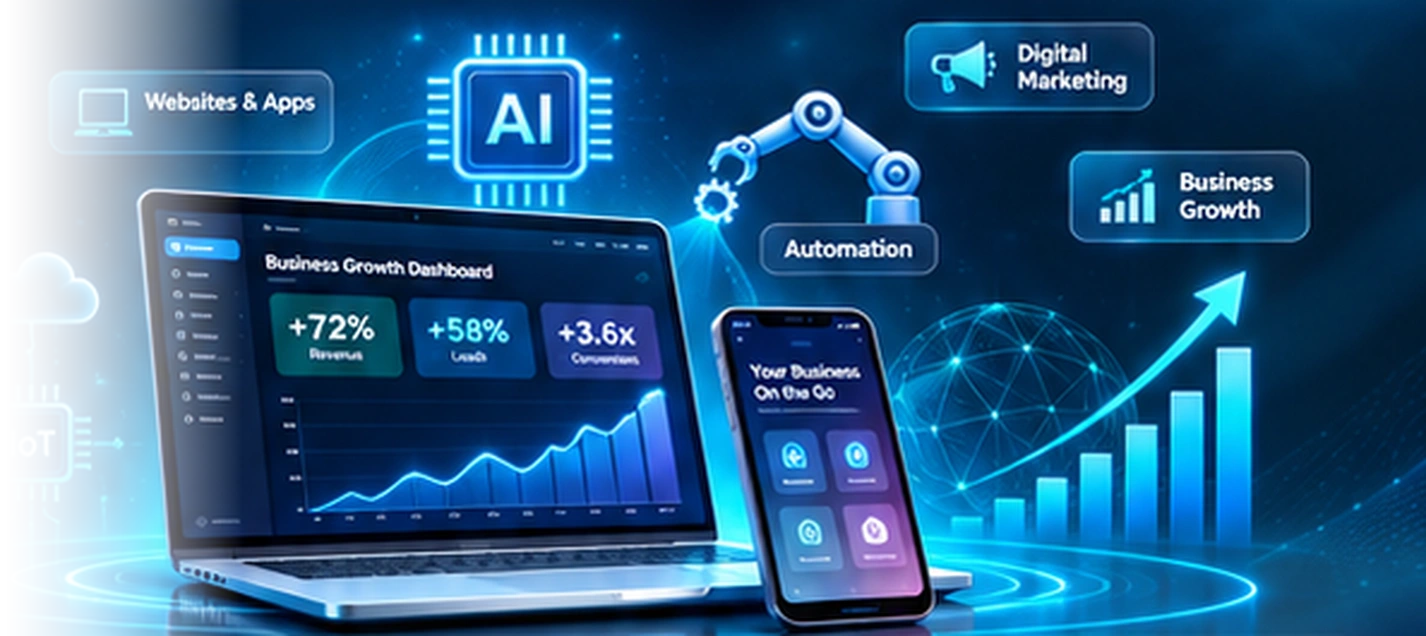
Customer-facing and workforce apps designed for responsive interaction, meaningful notifications, reliable APIs and measurable product adoption.
Make your service useful on the move with an app people can understand and adopt.
 Android & iOS Apps
Better technology begins with understanding what slows your team, confuses customers or makes growth difficult.
Basic status updates and simple tasks still require calls or email.
Design intuitive self-service journeys, profile screens and timely status notifications.
Disconnected paper forms and spreadsheets cause slow or duplicated updates.
Create mobile data capture, role-based access and API-backed sync flows.
Feature changes, device differences and vague requirements create rework.
Prototype before coding, define acceptance criteria and implement a tested release process.
Every stage has a practical purpose. We define the scope around your actual business needs and constraints.
Define app users, journeys, permissions and offline needs.
Create clickable mobile flows and validate with stakeholders.
Implement Android/iOS app, API integration and secure sessions.
Test device matrix, assist publishing and review adoption signals.
A clear breakdown of the capabilities and materials we can plan into your project.
The final deliverables depend on your approved requirements and agreed proposal; these are capability examples, not a fixed package.
We recommend success measures based on your goals, then use reporting to see what is working and what needs attention.
First successful action after install
Use of core in-app workflows
Crash-free sessions and API errors
Return visits and task completion
Illustrative adoption index
S1–S6 are fictional sample checkpoints used only to demonstrate a reporting layout.
Installs and onboarding completion
Active users and core task usage
Crashes, ANRs and API errors
Return usage by cohort
Reporting preview only: The chart uses invented demonstration values; it does not show real performance, promise a percentage improvement or represent a client case study. Reporting fields and integrations are agreed project by project.
Clear answers about capabilities, implementation, compatibility and what you can expect.
Select a question to expand its answer.
Yes, we can scope both platforms. The technology approach depends on features, device capabilities, expected performance and maintenance requirements.
Cross-platform development can simplify shared features and release management. Native development may be preferable for demanding device-specific capabilities. We recommend an approach after discovery.
Selected features can support offline caching and queued data entry when designed for it. Synchronisation, conflict rules and data security need explicit planning.
Submission support can be part of the agreed scope, but approval is controlled by Apple and Google and depends on their current policies.
Usually through a secure API layer. We assess existing data structures, authentication and hosting before integrating.
We define metrics such as onboarding completion, core task success, app stability, repeat usage and support issues aligned to your app goals.
We start with a discovery discussion about your goals, users, current systems and success criteria. After reviewing available information, we recommend priorities and confirm a tailored scope, responsibilities and delivery stages.
After launch, we review the agreed checks, usage signals and issues. Maintenance, content improvements, monitoring or optimisation can be arranged as a separate ongoing engagement depending on the type of service.
Have an idea or a business goal? Let’s turn it into a powerful digital solution with technology, marketing and automation.